
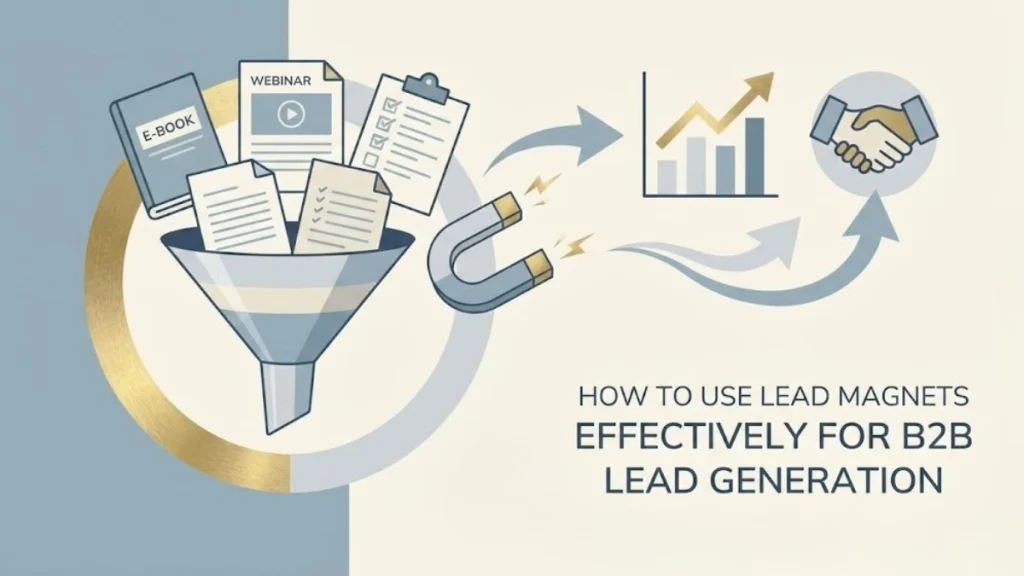
Lead magnets are one of the most effective ways to convert anonymous visitors into qualified leads by offering high value, intent aligned resources. In B2B, their effectiveness depends not on format but on specificity, clarity of value, and alignment with buyer pains.
Direct answer:
Use lead magnets effectively by offering high value assets that solve a specific problem for a specific persona at a specific stage of the funnel.
High performing lead magnets accelerate qualification, improve scoring accuracy, and serve as a bridge between content engagement and sales readiness.
Why lead magnets still work in B2B acquisition
Even with increasing information abundance, buyers still exchange their data for valuable, actionable resources when the perceived value is immediate and strong.
Direct answer:
Lead magnets work because they reduce uncertainty, deliver clarity, and support decision making in ways generic content cannot.
B2B teams rely on lead magnets to:
• accelerate trust building
• qualify leads with strong behavioral signals
• nurture prospects toward MOFU and BOFU stages
• generate high-fit leads at low acquisition cost
Lead magnets occupy a central place in the B2B lead generation strategies framework, acting as a key transition between awareness and intent.
What makes a lead magnet high performing in B2B?
A lead magnet performs only when it creates an immediate perception of value that justifies sharing personal and professional information.
Direct answer:
A high performing lead magnet is specific, actionable, and solves a focused problem for a clearly defined ICP slice.
The three pillars of a strong lead magnet:
1. Relevance
It solves a pressing problem or clarifies a high-impact decision.
2. Specificity
It focuses on one outcome, not a broad topic.
3. Actionability
The reader can apply the content instantly with minimal guidance.
When these three elements come together, conversion rates rise substantially.
Which lead magnet formats convert best in B2B?
Different formats work for different levels of intent. Senior decision makers prefer depth and clarity, not generic templates.
Direct answer:
The best converting lead magnets provide strategic clarity, operational guidance, or measurable insights tied to core business outcomes.
Top performing B2B formats:
Frameworks & Playbooks executives trust strategic clarity
Benchmark Reports senior buyers value data for comparison
Checklists & Action Guides quick wins for operational teams
ROI Calculators strong BOFU intent validation
Case Studies & Blueprints demonstrate real proof and reduce risk
These formats align with the decision criteria of modern B2B buying committees.
How to match lead magnets to funnel stages
Matching lead magnets to intent is critical. A BOFU asset offered too early causes friction. A TOFU asset offered too late fails to move the buyer forward.
Direct answer:
Choose your lead magnet format based on TOFU, MOFU, and BOFU intent to guide buyers smoothly through their journey.
TOFU Lead Magnets
Objective: spark initial interest
Examples:
• checklists
• industry insights
• explainers
MOFU Lead Magnets
Objective: build trust and differentiate
Examples:
• case studies
• strategy frameworks
• webinars
BOFU lead magnets
Objective: validate and justify decisions
Examples:
• ROI tools
• implementation guides
• comparison blueprints
This progression mirrors the funnel logic outlined in optimizing conversion funnels for B2B growth.
How to design lead magnets that convert quickly
First impressions determine conversion. The buyer must see the value instantly.
Direct answer:
Design lead magnets with clear outcomes, minimal friction, and immediate applicability.
High conversion design elements include:
• clear, benefit first headline
• value proposition above the fold
• minimal form fields
• mobile first experience
• short, frictionless access path
Small design changes often lead to large jumps in conversion rate.
How to promote lead magnets across your acquisition channels
Visibility drives performance. The best lead magnets fail when not distributed strategically.
Direct answer:
Promote lead magnets through the channels your ICP uses most to research solutions and validate expertise.
Top distribution channels include:
• LinkedIn thought leadership
• nurturing email sequences
• SEO-optimized content pages
• retargeting campaigns
• webinars and workshops
• resource libraries
For optimal results, embed lead magnets within the content ecosystem described in how to create content that converts.
How to measure lead magnet performance in B2B
Measuring only download numbers leads to false conclusions. What matters is intent and pipeline progression.
Direct answer:
Measure lead magnet performance through engagement quality, progression through the funnel, and pipeline contribution not downloads.
Key performance metrics include:
• CTA click through rate
• form completion rate
• time spent with the asset
• MQL → SQL progression
• revenue influence
• channel attribution
This aligns with ROI measurement best practices described in how to measure B2B lead generation ROI.