
IMAGE BY MERIEM AB & IMAGE FX
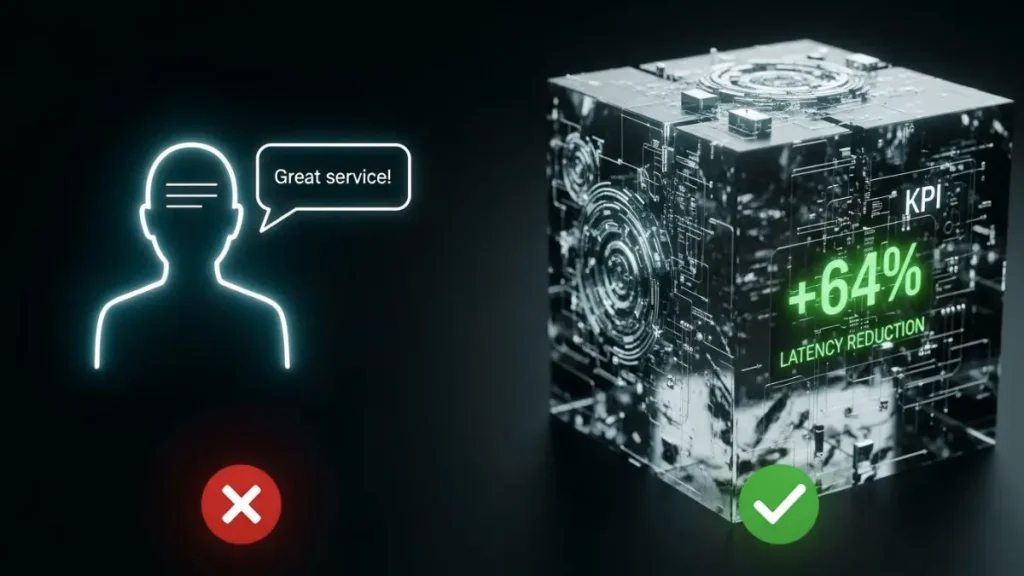
In the enterprise B2B landscape, the “happy customer” quote has become a liability rather than an asset. For a decision-making unit (DMU) managing high-ticket investments, generic praise like “They are great partners” or “Excellent service” acts as a red flag. These statements, often referred to as “marketing fluff,” signal a lack of technical depth and a potential fabrication of success. In an era dominated by transparency and data-backed claims, the generic testimonial is where trust goes to die.
The erosion of the “smile-and-quote” model
The primary reason generic testimonials fail to convert high-ticket leads is their lack of specificity. Professional buyers are trained to identify patterns of low-value content. When a testimonial fails to address the specific technical or financial friction points of the industry, it is instantly categorized as biased marketing collateral.
The perception of manufactured trust
In 2026, institutional skepticism is at an all-time high. The ease of generating AI-driven praise has devalued text-based endorsements that lack verifiable context. When a high-value prospect sees a carousel of generic quotes, they don’t see social proof; they see a curated facade designed to hide a lack of real-world implementation data. This “fluff” creates a psychological distance between the prospect’s needs and your solution. To convert, social proof must transition from being a static endorsement to becoming a dynamic record of problem-solving.
Failing the risk-mitigation test
Enterprise procurement is fundamentally an exercise in risk mitigation. A CFO or CTO looking at a testimonial isn’t asking if the client was “happy”—they are asking if the solution survived a specific technical crisis or delivered a measurable ROI within a specific timeframe. Generic testimonials fail this test completely. They offer emotional validation where the prospect requires structural proof. By relying on fluff, organizations inadvertently signal that they do not understand the rigorous demands of the enterprise decision-making unit.
The solution: engineering technical social proof for the DMU
To overcome the trust deficit created by generic testimonials, organizations must shift from “harvesting quotes” to “engineering proof.” This requires a structured protocol that extracts high-density technical data and aligns it with the specific anxieties of the decision-making unit. A high-ticket B2B conversion is triggered not by the customer’s satisfaction, but by the documented evidence of their operational success.
Implementing the KPI-driven testimonial structure
The first step in technical social proof engineering is the mandatory integration of hard metrics. A quote must follow a Baseline-Intervention-Outcome (BIO) structure. Instead of saying the solution was “effective,” the proof must state: “By deploying the API-first architecture, we reduced legacy system latency by 64% within the first 48 hours, resulting in a 12% increase in checkout completion rates.” This level of precision provides thehow to build a B2B case study system that turns SEO traffic into revenue framework with the raw material needed to satisfy the CFO’s requirement for measurable ROI.
The architecture of the “Technical Autopsy” quote
For the technical gatekeeper (CTO or Lead Engineer), trust is built through the documentation of the “how.” A refined testimonial should include details about the technical environment in which the success occurred. Mentioning specific integrations and the hurdles overcome during implementation builds “technical intimacy.” This “scars of the process” approach proves that the vendor has navigated similar complexities before, directly addressing the why your B2B case studies are failing to convert high-ticket leads by replacing narrative fluff with engineering reality.
The stakeholder-aligned validation matrix
A single testimonial cannot satisfy the entire C-suite. High-performance social proof must be modular, offering different layers of validation for different roles within the DMU. To achieve maximum conversion velocity, social proof should be segmented into “Proof Modules.”
- The Financial Module: Focuses on TCO (Total Cost of Ownership) reduction and payback periods.
- The Technical Module: Focuses on security compliance (SOC2, ISO) and interoperability.
- The Strategic Module: Focuses on competitive advantage.
By presenting a prospect with a testimonial from a peer in their specific role, you eliminate the cognitive friction of translation. This role-aligned validation is the cornerstone of technical success without leaking confidential data, as it allows for specialized depth without exposing sensitive corporate strategy.
from claims to institutional facts
The final layer of engineering is the verification protocol. In 2026, self-reported quotes are secondary to verified third-party signals. Integrating “Trust Layers”—such as verified badges from platforms like G2 or direct links to public audit logs—transforms a testimonial from a claim into an institutional fact. This protocol ensures that every piece of social proof is resilient to the “marketing fluff” filter, positioning the organization as a transparent and data-driven partner in a skeptical market.