

The transition from artisanal acquisition to predictive revenue velocity
The transition from artisanal lead acquisition to a fully industrialized revenue engine is no longer a competitive advantage, it is a requirement for survival in a fragmented, AI-saturated market. As we navigate 2026, the traditional boundaries between marketing, sales, and data science have dissolved into a single, unified objective: predictive revenue velocity. Industrializing this process requires a fundamental shift from high-volume harvesting to high-precision engineering, where every digital touchpoint is architected to eliminate friction and maximize the signal-to-noise ratio.
In the “Artisanal Era,” B2B teams relied on disjointed campaigns and manual follow-ups, leading to a “leaky bucket” syndrome where up to 70% of potential intent signals were lost in the cracks of siloed departments. The Industrialized Era, however, treats every interaction as a data point within a cohesive, self-optimizing organism. This is not merely about “automating tasks”; it is about building a system that anticipates buyer needs before they are explicitly stated, ensuring that the brand is present at the exact moment of cognitive readiness.
The macro perspective: moving beyond the fallacy of linear funnels
For decades, B2B organizations operated under the fallacy of the linear funnel, a model that assumes a predictable, sequential journey from awareness to conversion. In the current landscape, buyer journeys are non-linear, multi-modal, and increasingly mediated by autonomous AI agents and generative search engines.
Industrialization is the process of building an infrastructure that can capture, score, and route intent signals across these complex paths with zero latency.
- The obsolescence of manual intervention: At scale, human-led lead processing introduces a degree of variance and delay that modern enterprise buyers will not tolerate. Every second of delay in routing a high-intent signal represents a measurable decay in conversion probability.
- Predictive relevance as the new currency: Success is now measured by an organization’s ability to synthesize historical patterns and real-time behavioral signals to provide the next best action autonomously.
- Systemic integration over tool-stacking: Industrialization demands a single source of truth where CRM, marketing automation, and AI decision engines operate as a unified nervous system.
The mathematical foundation: Solving for Sales Velocity (V)
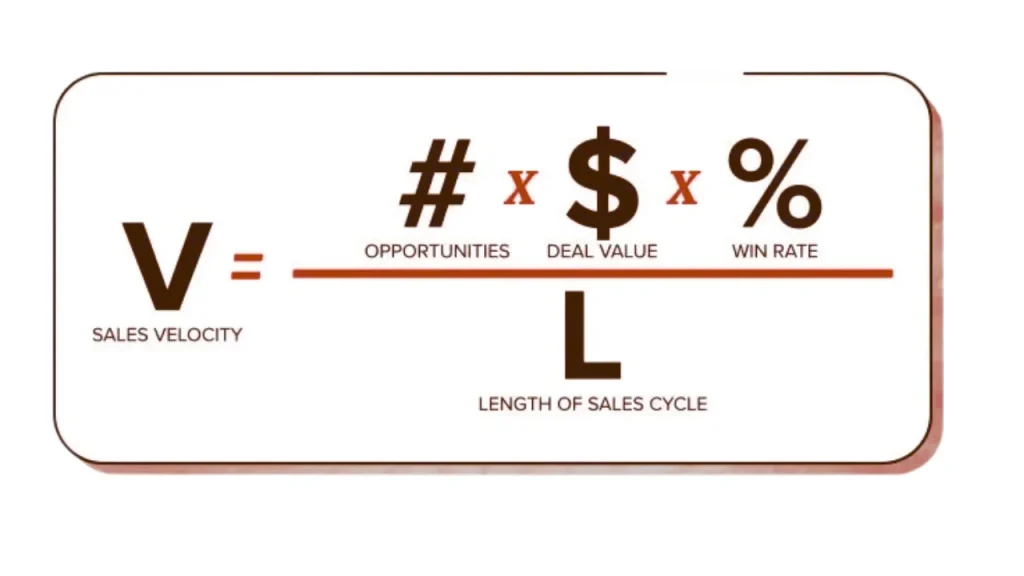
The ultimate KPI of an industrialized lead generation machine is Sales Velocity (V). In the Empire’s framework, this is not just a metric, but a North Star that dictates every operational decision.
V=
Length of Sales Cycle
Opportunities×Avg.DealValue×WinRate%
To industrialize this equation, the lead generation engine must target each variable simultaneously. Increasing the number of opportunities (Opportunities) without maintaining the quality (WinRate) leads to system bloat. Conversely, focusing only on deal value (Avg.DealValue) without addressing the speed of the journey (Length of Sales Cycle) creates a bottleneck in cash flow. An industrialized approach uses predictive lead scoring to filter for high-win-rate accounts while using automated routing to collapse the sales cycle length from months to weeks.
The technical blueprint for scale: Building the high-velocity engine
Industrialization is impossible without a standardized, high-velocity infrastructure that converts raw intent into actionable sales intelligence. This phase focuses on the three critical gears of the revenue engine:
1. Zero-latency routing architecture
Leads are matched against account ownership data and representative availability in real-time. This ensures that a high-intent prospect is connected with a specialist in under 60 seconds. By implementing API-first triggers, the “Empire” ensures that the momentum of the buyer’s initial interest is captured before cognitive cooling occurs.
2. Multidimensional predictive scoring
Industrialized scoring utilizes machine learning to weigh behavioral signal synthesis and historical pattern matching. Unlike traditional point-based scoring, which often rewards superficial engagement like PDF downloads, predictive scoring identifies clusters of activity across the Decision-Making Unit (DMU).
- Behavioral Synthesis: Analyzing the frequency and depth of interactions across multiple touchpoints (web, social, email).
- Historical Pattern Matching: Comparing current lead behavior against the digital footprints of closed-won accounts.
3. Deployment of liquid assets
To dominate the Generative Search Experience (SGE), content must be broken into high-signal fragments that AI engines can cite directly. This “liquid content” architecture positions the brand as the definitive answer source within the AI-generated snapshot.
Engineering the Lead Ops ecosystem
The operational core of the industrial framework is Lead Ops, the bridge between Marketing automation and Sales execution.
- Standardization of Data: Every lead must enter the system with a standardized set of attributes (Clean Room Data).
- Automated Escalation: If a high-priority lead is not touched within the SLA timeframe, the system autonomously reroute the lead to an available “Sniper”.
- Feedback Loops: Sales teams provide structured feedback to refine the AI scoring models over time.
Operational governance: The integrity of the industrialized engine
The final stage of industrialization is the transition from deployment to continuous governance. An industrialized lead generation engine is not a static installation; it is a dynamic system that requires rigorous oversight to maintain its predictive accuracy.
Establishing the RevOps command center
- Systemic Integrity: Regular audits of API latencies and data synchronization between the “Magnet” and the CRM.
- SLA Enforcement: Monitoring “Speed to Lead” metrics to ensure human intervention occurs within the critical 5-minute window.
- Ethical AI Guardrails: Ensuring autonomous agents operate within defined parameters to protect brand reputation.
The ROI of industrial precision: Financial outcomes
By automating the lower-funnel qualification, organizations can reallocate high-value human capital to complex negotiation. The financial impact is measurable:
- CAC Reduction: Eliminating manual labor in the discovery and qualification phases.
- Increased Sales Velocity: Shortening the sales cycle through immediate routing.
- LTV Expansion: Prioritizing leads that match high-value ICP clusters.
The future of autonomous revenue operations
Looking toward 2026, the industrialized system will move from “Automated” to “Autonomous”. The system will launch personalized nurture sequences in response to real-time market shifts without human prompting. In this landscape, authority is measured by the ability to capture value at the speed of intent. Organizations that fail to industrialize will be outpaced by “Empires” that operate with surgical precision.