
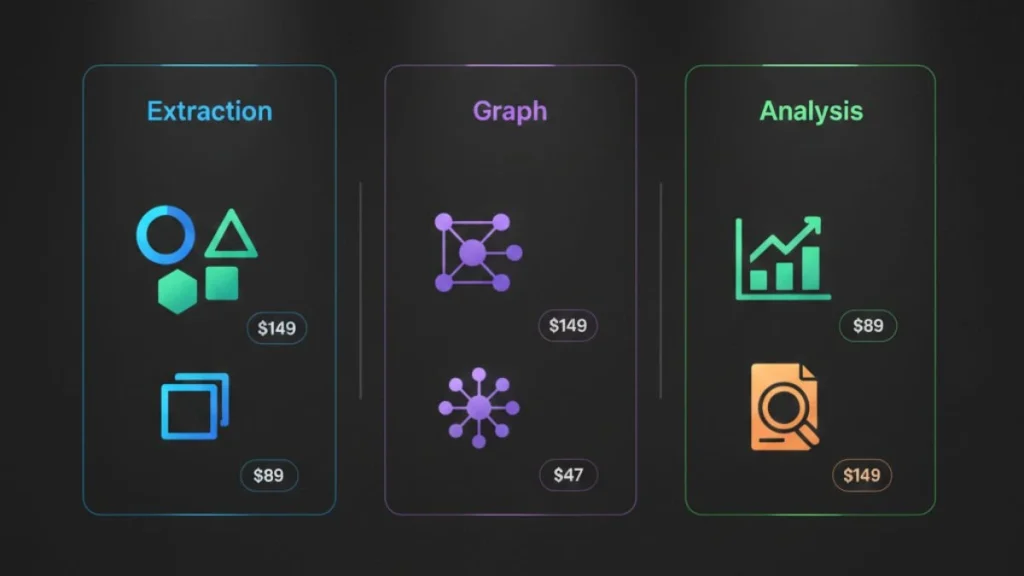
Implementing semantic optimization requires specialized tools that move beyond traditional keyword research to analyze entity relationships, topical coverage, and content comprehensiveness. This review evaluates seven leading platforms designed for entity extraction, Knowledge Graph analysis, and semantic content optimization. Each tool addresses different aspects of the semantic SEO workflow from initial entity mapping through competitive gap analysis to content validation helping B2B content teams shift from keyword targeting to topical authority building.
What semantic SEO tools actually measure (vs traditional keyword tools)
Traditional keyword research platforms report search volume, competition scores, and ranking difficulty for specific phrases. Semantic SEO tools analyze fundamentally different signals: entity co-occurrence patterns, topical coverage depth, Knowledge Graph relationships, and content comprehensiveness benchmarks. This distinction matters because ranking in 2026 depends more on demonstrated topic expertise than keyword insertion frequency.
Entity extraction tools identify which real-world concepts, people, places, and things your content addresses beyond surface-level keywords. When you publish an article about “B2B marketing automation,” entity analysis reveals whether you’ve covered mandatory supporting concepts like “lead nurturing workflows,” “multi-touch attribution,” “sales pipeline integration,” and “behavior-based segmentation.” Missing these entities signals incomplete topic treatment regardless of keyword optimization quality.
Natural language processing platforms evaluate how accurately your content demonstrates entity relationships that Google validates in its Knowledge Graph [what-are-semantic-keywords]. If you claim “account-based marketing requires intent data,” the tool verifies this relationship reflects actual implementation patterns rather than marketing assumptions. Inaccurate entity connections damage E-E-A-T signals faster than missing keywords reduce rankings.
Category 1: Entity extraction and NLP analysis platforms
MarketMuse leads the category with AI-powered content intelligence that maps topical coverage against competitive benchmarks. The platform analyzes top-ranking content to identify which entities appear consistently, then scores your content’s entity coverage depth. A MarketMuse Content Score of 45 means your article covers entities at 45% the depth of top-ranking competitors actionable feedback that keyword density metrics cannot provide.
The platform excels at identifying entity gaps where competitors address concepts your content omits. For B2B SaaS topics, MarketMuse consistently surfaces technical entities that manual research misses implementation complexity factors, integration requirements, and operational workflow considerations that separate comprehensive coverage from superficial treatment. Pricing starts at $149/month for individual plans, scaling to enterprise licensing for content teams.
Clearscope focuses on content optimization through term frequency analysis weighted by semantic relevance rather than raw keyword density. The tool generates content briefs showing which related terms appear in top-ranking content, helping writers naturally incorporate semantic variations without mechanical keyword stuffing. Clearscope’s strength lies in balancing entity coverage with readability recommendations prioritize natural language patterns over algorithmic manipulation.
The platform integrates directly with Google Docs and WordPress, providing real-time optimization feedback as writers create content. A Clearscope Content Grade of A+ indicates comprehensive semantic coverage matching top-ranking competitor standards. Pricing runs $170/month for basic plans with volume discounts for agency and enterprise use.
Frase combines entity analysis with question research, identifying which specific queries related to your topic require answers within your content [lsi-keywords-vs-semantic-entities-which-drives-better-rankings]. The tool extracts questions from “People Also Ask” boxes and top-ranking content, then maps these to entity coverage requirements. This approach helps B2B content address the complete decision framework buyers research rather than isolated keyword moments.
Frase’s content brief generation saves significant research time by automatically clustering related topics, identifying mandatory entities, and suggesting content structure. The platform includes AI writing assistance, though semantic optimization benefits come primarily from its entity analysis capabilities rather than automated content generation. Pricing starts at $44.99/month for individual users.
Category 2: Knowledge Graph and entity relationship validators
InLinks specializes in entity-based internal linking and Knowledge Graph optimization through automated schema markup and entity relationship mapping. The tool analyzes your content ecosystem to identify topical clusters, then optimizes internal linking based on semantic relationships rather than keyword anchors [how-to-build-authority-with-strategic-internal-links].
The platform automatically generates schema.org markup declaring entity relationships explicitly a technical validation layer that reinforces natural language semantic signals. InLinks creates content briefs showing which entities must appear to demonstrate comprehensive topic coverage, then tracks entity mention patterns across your site to identify systematic coverage gaps. Pricing begins at $47/month for small sites.
Google’s Natural Language API provides direct access to the entity recognition technology Google uses for search understanding. The API identifies entities in your content, classifies them by type (person, organization, event, product), and assigns salience scores indicating each entity’s importance to the overall text. This reveals whether your content emphasizes the entities Google considers central to your topic.
The API costs $1 per 1,000 analysis units, making it extremely cost-effective for periodic content audits. While it lacks the content optimization features of commercial platforms, the Natural Language API delivers unfiltered insight into how Google’s own algorithms parse entity relationships and topical focus. B2B content strategists use it to validate that optimization efforts align with actual Google entity recognition.
Category 3: Competitive semantic analysis and gap identification
SurferSEO combines on-page optimization with semantic content analysis, comparing your entity coverage against the top 10-50 ranking competitors. The platform generates content editors showing term frequency targets, structural recommendations, and entity coverage benchmarks drawn from competitive analysis. SurferSEO’s Content Score algorithm weighs entity presence, semantic relevance, and structural optimization to predict ranking potential.
The tool excels at reverse-engineering what makes competitor content rank from a semantic perspective [how-to-conduct-semantic-keyword-research-for-b2b]. It identifies which entities appear consistently across top-ranking pages versus which represent differentiation opportunities. For B2B topics with limited search volume data, this competitive entity analysis provides strategic direction that traditional keyword tools cannot deliver. Pricing starts at $89/month.
SEMrush Topic Research and Ahrefs Content Gap Analysis both incorporate semantic analysis into their broader SEO platforms. SEMrush maps related topics and questions around your core subject, while Ahrefs identifies keywords competitors rank for that you don’t both useful for discovering entity coverage gaps. However, these tools emphasize traditional keyword metrics over pure semantic analysis, making them complementary rather than replacement solutions for entity-focused optimization.
Implementation framework: building your semantic SEO tool stack
Most effective semantic optimization uses multiple tools addressing different workflow stages rather than relying on a single platform. Start content planning with MarketMuse or Frase to identify required entity coverage and topical scope [semantic-seo-checklist]. These platforms establish semantic benchmarks before writing begins, preventing the publish-then-optimize cycle that wastes production resources.
During content creation, use Clearscope or SurferSEO for real-time entity coverage feedback. These integration-friendly tools help writers achieve semantic comprehensiveness without sacrificing natural language flow or reader experience. The goal isn’t matching competitor entity counts mechanically but demonstrating genuine topic understanding through accurate relationship mapping.
Post-publication, validate entity recognition with Google’s Natural Language API and optimize internal linking through InLinks. This validation confirms that your intended semantic signals actually register in Google’s entity extraction, while semantic internal linking reinforces topical authority across your content ecosystem [semantic-seo-how-to-build-topical-authority].
Tool selection criteria for B2B content teams
Choose semantic SEO tools based on your primary optimization bottleneck rather than feature comprehensiveness. Teams struggling with entity gap identification benefit most from MarketMuse’s competitive coverage analysis. Content creators needing real-time optimization guidance gain more from Clearscope’s writing integration. Sites with large content libraries require InLinks’ automated entity relationship mapping.
Budget considerations should factor in time savings beyond subscription costs. A $170/month Clearscope subscription that reduces content revision cycles from three rounds to one delivers far greater ROI than $50/month tools requiring extensive manual interpretation. For B2B content teams producing 10+ articles monthly, semantic tools pay for themselves by preventing publication of underdeveloped content that can’t compete semantically.
Integration capabilities matter significantly for workflow efficiency. Tools that work within existing content management systems (WordPress, Google Docs, content platforms) see higher adoption than standalone applications requiring context switching. Real-time feedback during writing proves more valuable than post-draft analysis that necessitates substantial rewrites.
Moving from tools to systematic semantic practice
Semantic SEO tools provide data, but strategic implementation requires understanding what entity coverage actually signals to search algorithms. The most sophisticated platform cannot compensate for content that lists entities without demonstrating how they connect operationally in real-world applications .
Use tools to establish entity coverage benchmarks and identify gaps, then apply human expertise to explain relationships accurately and comprehensively. This combination of data-driven entity identification and expert knowledge demonstration produces content that ranks sustainably as algorithm sophistication increases.
The platforms reviewed here represent current semantic optimization technology, but the fundamental principles entity mapping, relationship accuracy, topical comprehensiveness remain constant regardless of tool evolution. Build semantic SEO workflows around these principles first, then select tools that accelerate execution rather than expecting software to substitute for strategic content thinking.
Ready to implement semantic optimization with the right tool stack for your B2B content strategy? Start with entity coverage analysis to identify your biggest optimization opportunities.