
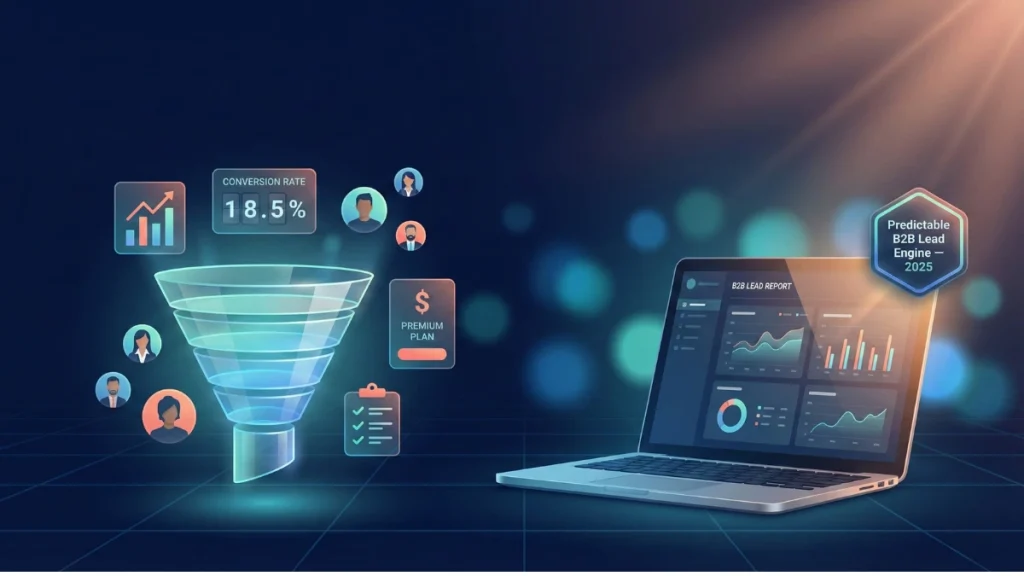
B2B lead generation works when companies align their strategy, content, channels, and qualification systems around buyer intent not volume. Modern acquisition is no longer driven by cold outreach or mass advertising. It is built on predictable, intent driven frameworks that attract, educate, and convert the right prospects through structured touchpoints. This guide consolidates the entire acquisition ecosystem from strategy to execution to help you build a scalable, revenue-focused lead engine fit for 2025 and beyond.
Why B2B lead generation has become a strategic priority
B2B lead generation is now the core of predictable growth because buying journeys have changed. Decision-makers research independently, compare vendors anonymously, and expect value before contact. Companies that rely on old models aggressive outbound, generic offers, or broad targeting struggle to create sustainable pipeline.
Direct answer:
B2B lead generation is essential because it creates predictable opportunities by attracting, educating, and qualifying high-intent prospects throughout their research journey.
Winning companies do three things differently:
• they build systems, not isolated tactics
• they align content with real buyer pains
• they measure performance across the funnel
This guide explains how to build such a system by connecting all moving parts into one acquisition engine.
Before building a strategy, many organizations begin with persona work such as the processes described in our article on [building a buyer persona for B2B success], which ensures alignment between message, channels, and lead quality.
What is B2B lead generation ?
B2B lead generation is the process of attracting, engaging, and qualifying potential customers in order to turn them into opportunities for sales teams. It relies on a combination of strategic content, targeted channels, and structured qualification systems. Effective lead generation doesn’t focus on quantity it focuses on generating leads that match your ICP and demonstrate clear intent.
Direct answer:
B2B lead generation means creating a consistent flow of high-intent prospects who match your ICP and are likely to become revenue.
High-performing companies treat lead generation as a structured system composed of:
• Attraction (SEO, content, social, paid, partnerships)
• Engagement (content depth, webinars, reports, offers)
• Qualification (scoring, funnel stages, intent signals)
• Conversion (sales process, enablement, nurturing)
Why the definition of “Lead” has evolved
The term “lead” used to refer to any person who filled out a form. Today, this definition is outdated and misleading.
Direct answer:
A modern B2B lead is someone who matches your ICP and demonstrates intent—not just someone who submits information.
This shift is driven by:
• independent research behavior
• longer buying cycles
• multi-channel journeys
• increasing buyer skepticism
• demand for proof and ROI clarity
Leads are not created they are earned through relevance and value.
What makes a lead “High-Intent”?
High-intent leads demonstrate behaviors that correlate with real buying interest.
Direct answer:
A high-intent lead engages with content and touchpoints that signal readiness, such as pricing pages, ROI tools, or comparison guides.
Behavioral signals include:
• repeated visits in a short period
• downloading strategic assets (e.g., frameworks, benchmarks)
• interacting with BOFU content
• attending webinars
• exploring implementation or pricing resources
This is why behavior-based systems like lead scoring become essential, as explored in the guide on [why lead scoring is essential for scaling B2B acquisition].
How B2B lead generation fits into the overall revenue engine
Lead generation does not operate independently. It sits at the intersection of marketing, sales, content, and analytics.
Direct answer:
Lead generation fuels the entire revenue engine by creating qualified opportunities that sales can convert into predictable revenue.
It interacts directly with:
• demand creation
• demand capture
• nurturing systems
• sales enablement
• conversion optimization
• customer lifecycle management
Teams that integrate these components operate with far greater predictability and ROI.
How B2B lead generation differs from B2C
B2C and B2B acquisition follow different psychological and structural patterns.
Direct answer:
B2B lead generation is more complex because buying decisions involve multiple stakeholders, longer cycles, higher risk, and higher-value transactions.
Key differences:
• decision-making is collective, not personal
• justification requires ROI, not emotion
• content must be educational, not promotional
• cycles can last weeks to months
• stakes and budgets are significantly higher
Understanding these differences is essential for designing relevant content and channels.
How to build the foundation of a strong B2B lead generation system
Everything starts with clarity about who you are trying to reach and what problems you solve.
Direct answer:
Build your lead generation foundation by defining your ICP, clarifying buyer pain points, and mapping intent signals across the funnel.
This foundational work is reinforced through persona methodologies described in the guide on [building a buyer persona for B2B success], which help align messaging, scoring, and channel strategies.
Once this foundation is set, you can scale your lead engine using the strategies detailed in the rest of this pilier.
One thing I’d add: intent signals from organic search are often the strongest early indicator, yet many teams ignore search behavior until late in the funnel.
Thanks 🙂